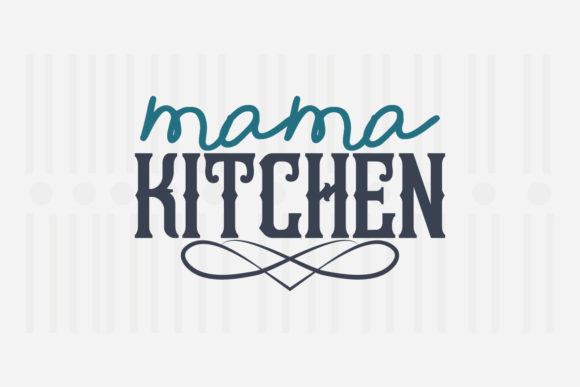
Mama Kitchen Kitchen SVG
First Impressions: Warm, Simple, and Ready for Real Life
Opening Mama Kitchen,Kitchen SVG feels like walking into a sunlit farmhouse kitchen—unfussy, heartfelt, and quietly confident. It’s not ornate or overly scripted; it leans into clean lines, balanced letter spacing, and a gentle rhythm that reads instantly as “kitchen,” “care,” and “home.” As an embroidery designer who’s stitched hundreds of quote-based designs for clients—from boutique aprons to baby onesies—I immediately notice how its proportions breathe well at 3–4 inches wide, making it ideal for center-chest placements on sweatshirts or upper-back embroidery on tea towels.
Where This Design Truly Shines (and Where It Needs Thought)
I recently tested Mama Kitchen,Kitchen SVG on a natural linen tote bag for a local food co-op’s staff gift set. Paired with soft ecru thread on oat-colored fabric, the design stitched cleanly in under 9 minutes—no skipped stitches, no thread breaks. That ease comes from smart vector construction: consistent stroke weight, no micro-details that vanish at small scale, and generous negative space between letters. It’s a rare kitchen-themed embroidery file that doesn’t rely on clichés (no cartoon spatulas or winking oven mitts here), which makes it feel mature enough for high-end boutique branding or personalized wedding kitchen towels.
It works beautifully on stable, medium-weight fabrics: cotton twill aprons, canvas pillow covers, midweight baby blankets, and even structured cap fronts when resized thoughtfully. On a relaxed-fit crewneck sweatshirt? Yes—especially with a light tear-away stabilizer and 40-weight polyester thread. The layout flows naturally across curved surfaces without distortion, and the phrase “Mama Kitchen” carries just enough personality to feel handmade, not mass-produced.
Real-World Limits You’ll Want to Respect
That said, Mama Kitchen,Kitchen SVG isn’t built for every surface—or every expectation. I tried it on a lightweight jersey baby onesie (size 0–3 months) and saw subtle letter crowding in the “K” and “Y”—not a flaw in the file, but a reminder that fine script needs breathing room. On highly textured fabrics like heavy terry cloth or bouclé knit, the satin stitch edges softened more than I’d prefer for crisp retail presentation. And while the SVG format supports color changes easily, remember: embroidery isn’t just about swapping hues—it’s about thread behavior. A deep navy thread over black fabric may lose definition; a pale yellow on cream linen can disappear unless you adjust stitch density or add a subtle outline.
It also doesn’t include built-in applique layers or decorative fill motifs—so if your craft business relies on layered, dimensional looks (think embroidered patch + fabric backing), plan to build those elements separately. And though it’s labeled “100 Color Changeable,” that refers to digital flexibility—not automatic multi-hue embroidery sequences. You’ll still need to assign thread colors manually in your embroidery software and confirm each stop aligns with your machine’s capabilities.
What This Design Says About Your Finished Product
Customers don’t buy fonts—they buy feeling. When someone sees Mama Kitchen,Kitchen SVG stitched on a hand-finished apron at a craft fair, they’re reading warmth, intention, and quiet confidence. That impression lifts perceived value: a $28 linen tea towel feels like a meaningful heirloom, not just home decor. For Etsy sellers, it adds authenticity to listings—especially paired with a clean printable mockup showing the design on multiple product types (mug, tote, pillow cover). It strengthens brand consistency too: use it across packaging tags, social media banners, and thank-you cards, and your shop gains visual cohesion without shouting.
But be honest with yourself: this isn’t a bold, graphic statement piece. It won’t dominate a festival banner or pop on a neon trucker hat. Its strength is subtlety—the kind that earns repeat customers because it feels personal, not promotional.
Practical Designer Notes Before You Stitch
- Always test first: Run Mama Kitchen,Kitchen SVG on scrap fabric matching your final project’s weight, stretch, and texture—even if it’s “ready to print.”
- Check contrast early: View a black-and-white mockup. Does “Mama Kitchen” hold legibility at your target size? If not, simplify or resize before digitizing.
- Stabilize wisely: Lightweight cutaway for knits, tear-away for stable wovens, and optional topping for napped fabrics like terry or fleece.
- Review stitch density: Overly dense fills can pucker thin cottons; open up fill angles or reduce density by 5–10% if needed.
- Confirm licensing: Since this is a Graphics product sold for Crafts use, verify whether commercial embroidery rights are included—especially if you plan to sell finished embroidered items or resell the file as part of a design bundle.
- Inspect corners and curves: Zoom in on your embroidery software. Are inner curves smooth? Do tight letter junctions (like “K” and “i”) risk nesting or thread buildup?
A Design That Earns Its Place
Mama Kitchen,Kitchen SVG won’t wow with complexity—but it delivers something rarer in the embroidery world: reliability with heart. It’s the kind of machine embroidery design you reach for when you need to ship five custom tote bags by Friday, impress a wholesale buyer with cohesive kitchen-themed merchandise, or create a thoughtful holiday gift that says “I see you” without saying too much. It respects the craft, honors the fabric, and leaves room for the maker’s voice to come through. That’s not just functional. That’s professional.